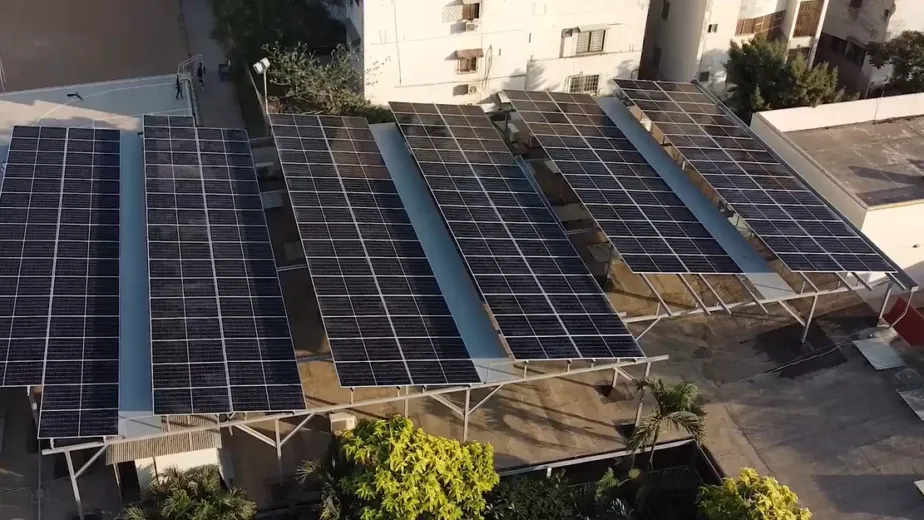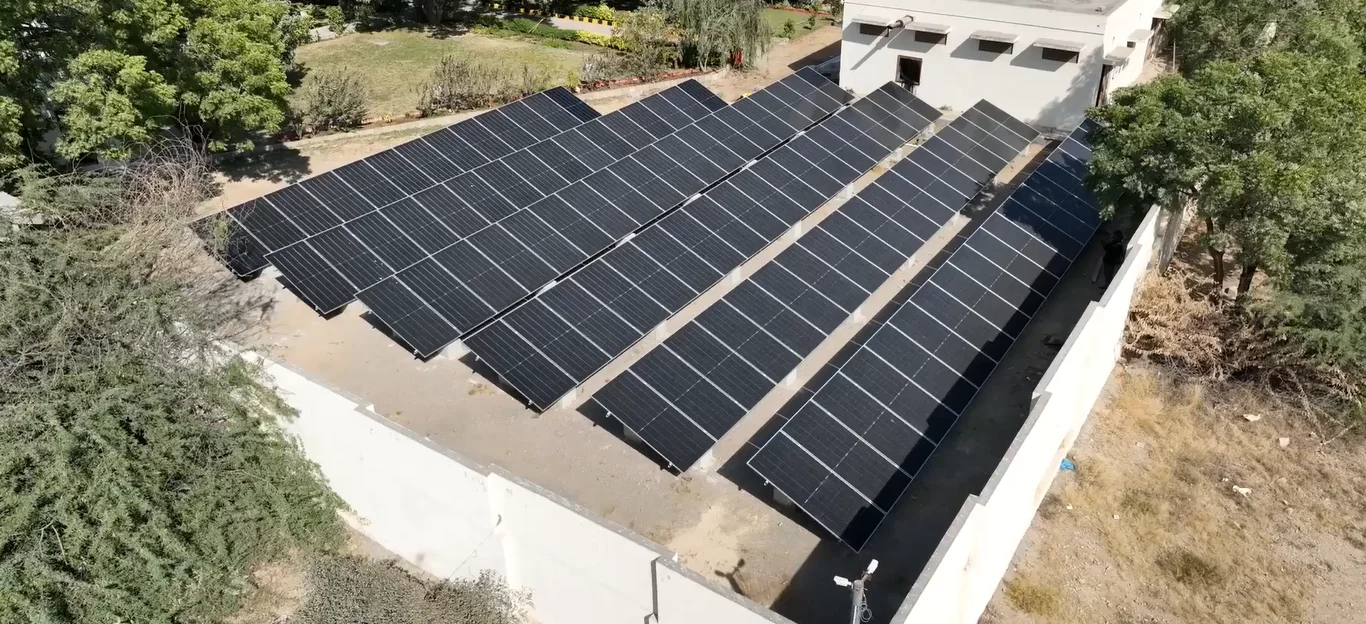
Almost every solar enquiry we receive in Karachi opens the same way. The customer tells us what their bill is, and asks what size system they need. It is a completely reasonable question. It is also the wrong starting point, and it is the reason a great many homes in this city have solar on the roof and still sweat through June.
A bill is an average. An air conditioner is a moment
Your bill tells us how many units you consumed across a whole month. It tells us nothing about the shape of that consumption — which is what actually decides whether a system works.
Consider two houses with identical bills. One runs two air conditioners for fourteen hours a day. The other runs six for four hours in the evening. Same units, same bill, completely different systems. Size both from the bill and one of them will be disappointed.
So we start with the appliances. How many air conditioners, inverter or conventional, and which rooms are actually in use through the afternoon. Then we work backwards to the array and the battery.
In a Karachi summer, the AC is the whole design
A two-ton inverter air conditioner draws somewhere around 1.6 kW while it is modulating. Six of them is roughly 9.6 kW before you have switched on a single light.
In most Karachi homes, air conditioning is more than half the total load through the hot months. That means the array has to be sized for a load that peaks at exactly the hours the sun is strongest — which is convenient — and the battery has to be sized for the evening, which is where most systems are quietly underspecified.
A fan on a UPS is not backup. If it is 34 degrees at eleven at night, nobody in that house is comfortable, and the system has not done its job.
The battery is where most money gets wasted
Here is the part nobody enjoys hearing. Covering a full night for an entire house from batteries costs more than the electricity will ever be worth. We have run the numbers repeatedly and it does not come out.
What works is covering the hours that matter. In practice that means splitting the distribution board. Essential circuits — the fridge, the lights, the wifi, the fans, one or two air conditioners in the rooms actually being used — sit on the battery. The rest stays on the grid.
That single decision turns a partial battery into a full working evening, and it usually saves a substantial amount of money against a system sized to back up everything.
What this means for your quotation
When you compare two quotations for your home, the useful question is not which one has more kilowatts. It is which one can tell you, specifically, which appliances will still be running at ten o’clock at night during a load shedding hour in June.
If an installer cannot answer that, they sized your system from your bill.
We survey every home before we quote. Send us your last bill and we will tell you what your house actually needs — not what the bill suggests.