

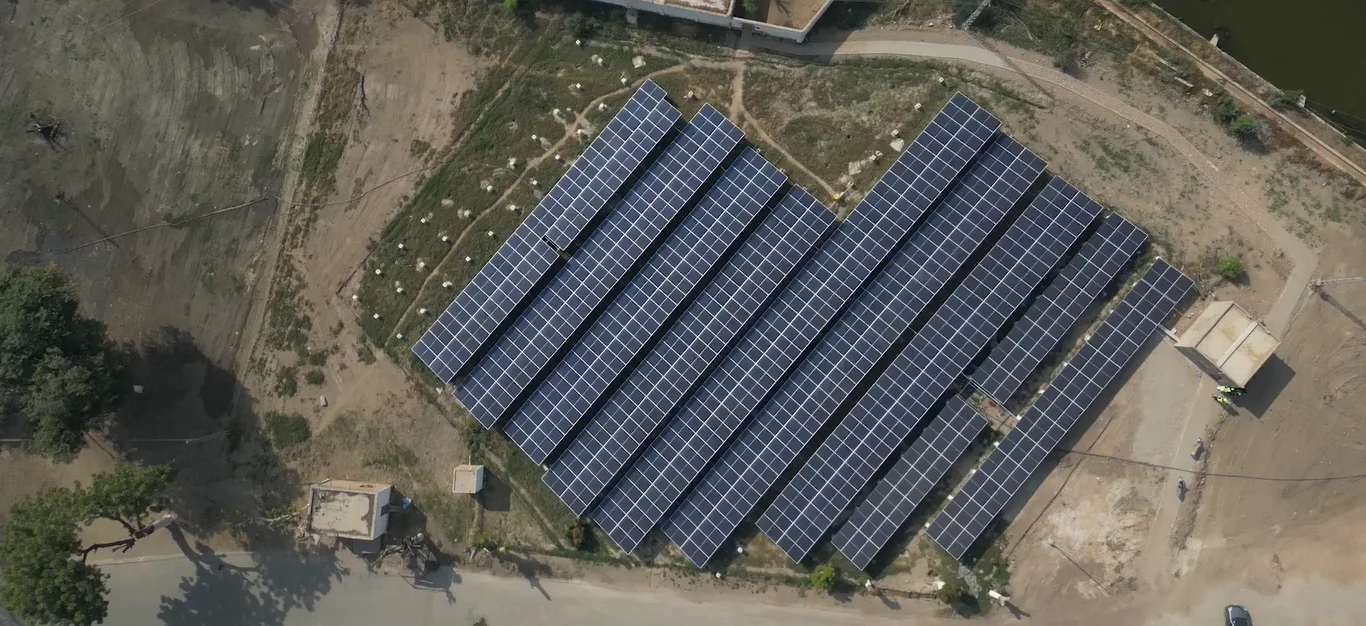
The most common complaint we hear about a solar system is not that it failed. It is that it quietly stopped producing what it used to, and nobody noticed for months.
Almost every time, the cause is the same, and it is sitting on top of the panels.
Karachi is a dusty city and a coastal one
We have installed over 24,000 kilowatts across Karachi and Sindh since 2018 — rooftops in Clifton, hospital blocks, university campuses, operational berths at Karachi Port, sugar and rice mills in the interior. The one condition every single site shares is dust.
A soiled array in this climate commonly loses 15 to 20 percent of its output. On an industrial site with husk, cement or cotton dust in the air, it can be worse. On a 650 kW array, twenty percent is roughly 200,000 units a year — a number large enough that it dwarfs most of the decisions people agonise over at the quotation stage.
Customers negotiate hard over the inverter brand and then lose more output to dust in one uncleaned year than the brand difference would cost them in ten.
The problem is that nothing breaks
A failed inverter announces itself. Soiling does not. Output falls gradually, the bill creeps up, and unless somebody is watching the generation data against expectation, it reads as normal.
This is why we fit string-level monitoring on commercial and industrial systems as standard. Not because it is impressive on a proposal, but because it is the only way anyone finds out that row three has been underperforming since March.
Cleaning is engineering, not housekeeping
Done badly, cleaning causes more damage than dust. Hard water leaves mineral deposits that etch the glass. Abrasive brushes scratch the anti-reflective coating permanently. Walking on modules causes microcracks you will not see for two years.
This is also why we specify walkways into every elevated structure we design. A 900 mm gap between rows is not wasted roof — it is the difference between a crew that can clean the array safely and a crew that damages it trying.
Why it is in the contract
We include a cleaning schedule in the scope of work rather than selling it afterwards as an annual service. Two reasons.
The first is honest self-interest: a system that underperforms reflects on us, whatever the cause, and we would rather protect the output than argue about it later.
The second is that it is the only credible answer to the question every customer in this market is really asking. There are a great many people in Karachi who will install solar on your roof. There are considerably fewer who will come back a year later.
Ideal Power Solutions. 450+ projects, 24,000+ kW, eight years, and a cleaning schedule written into the contract.
