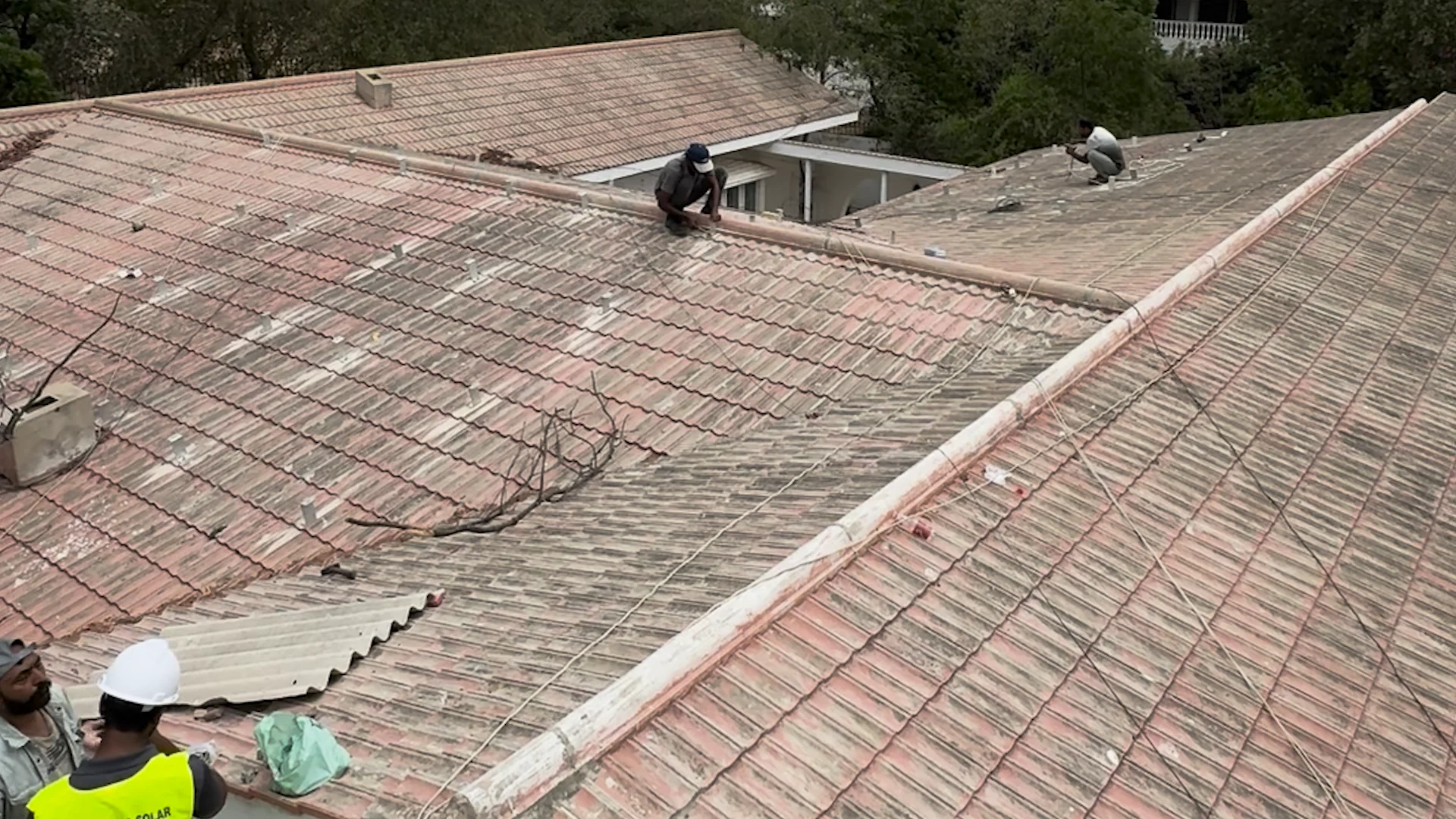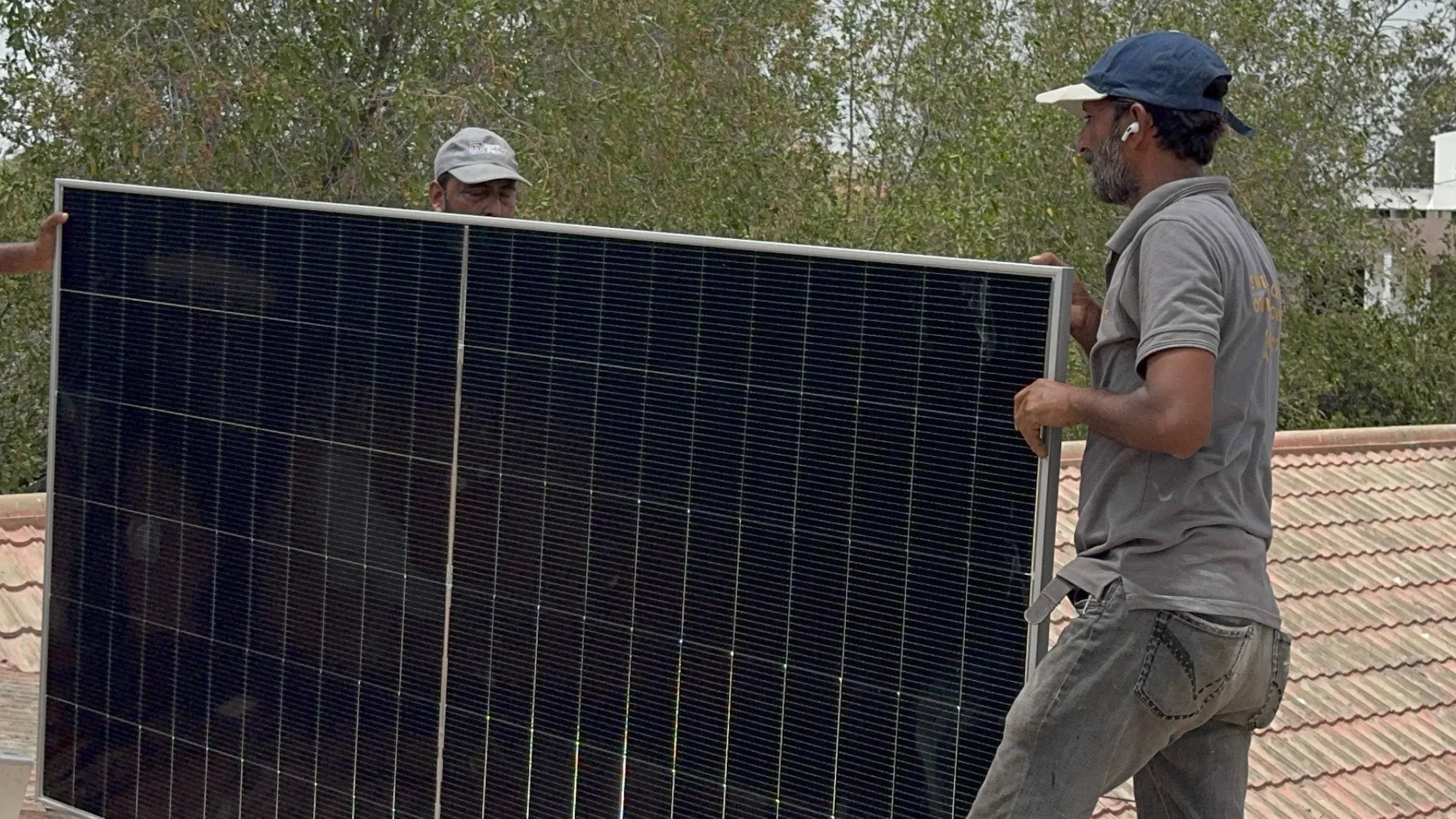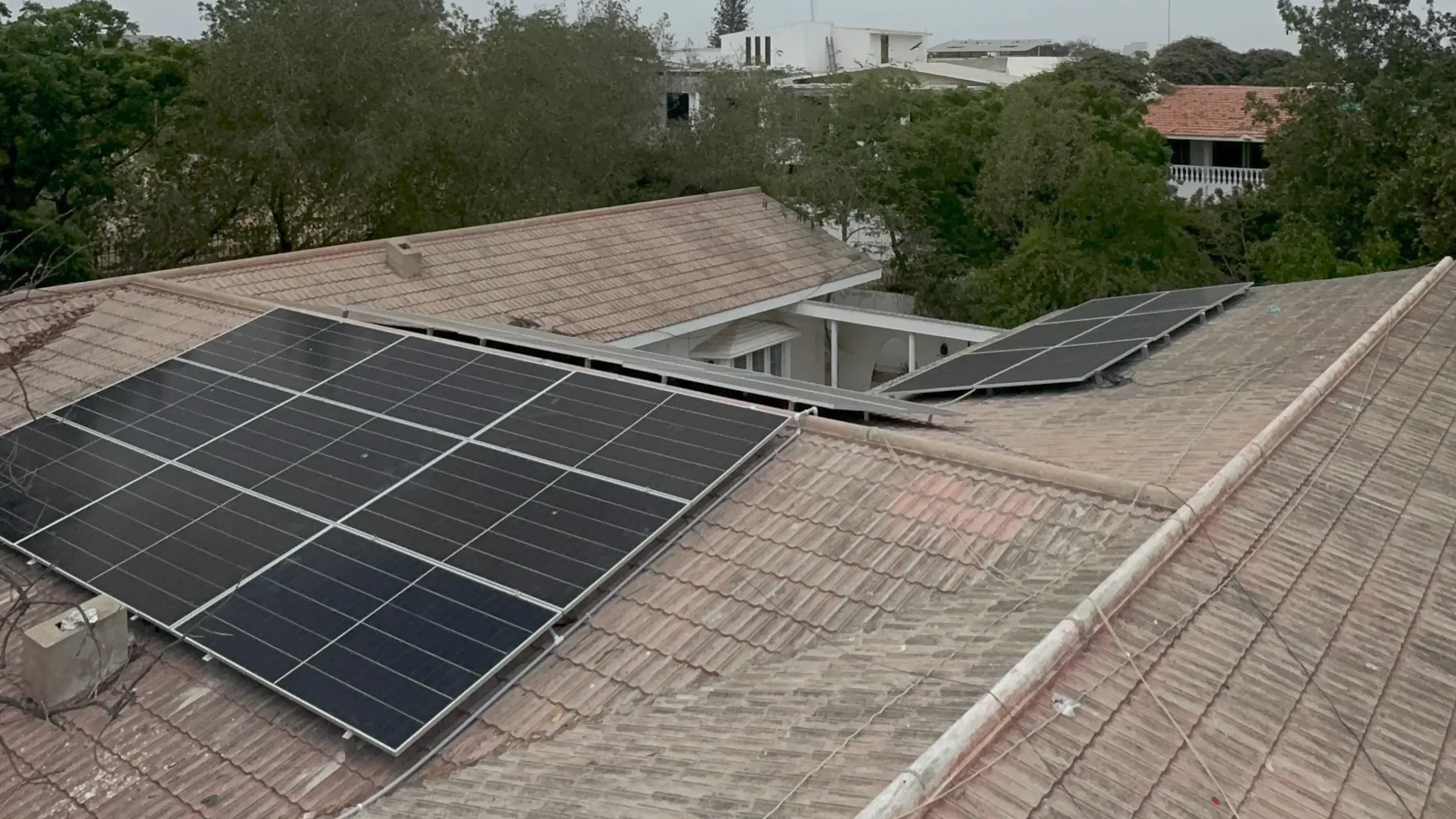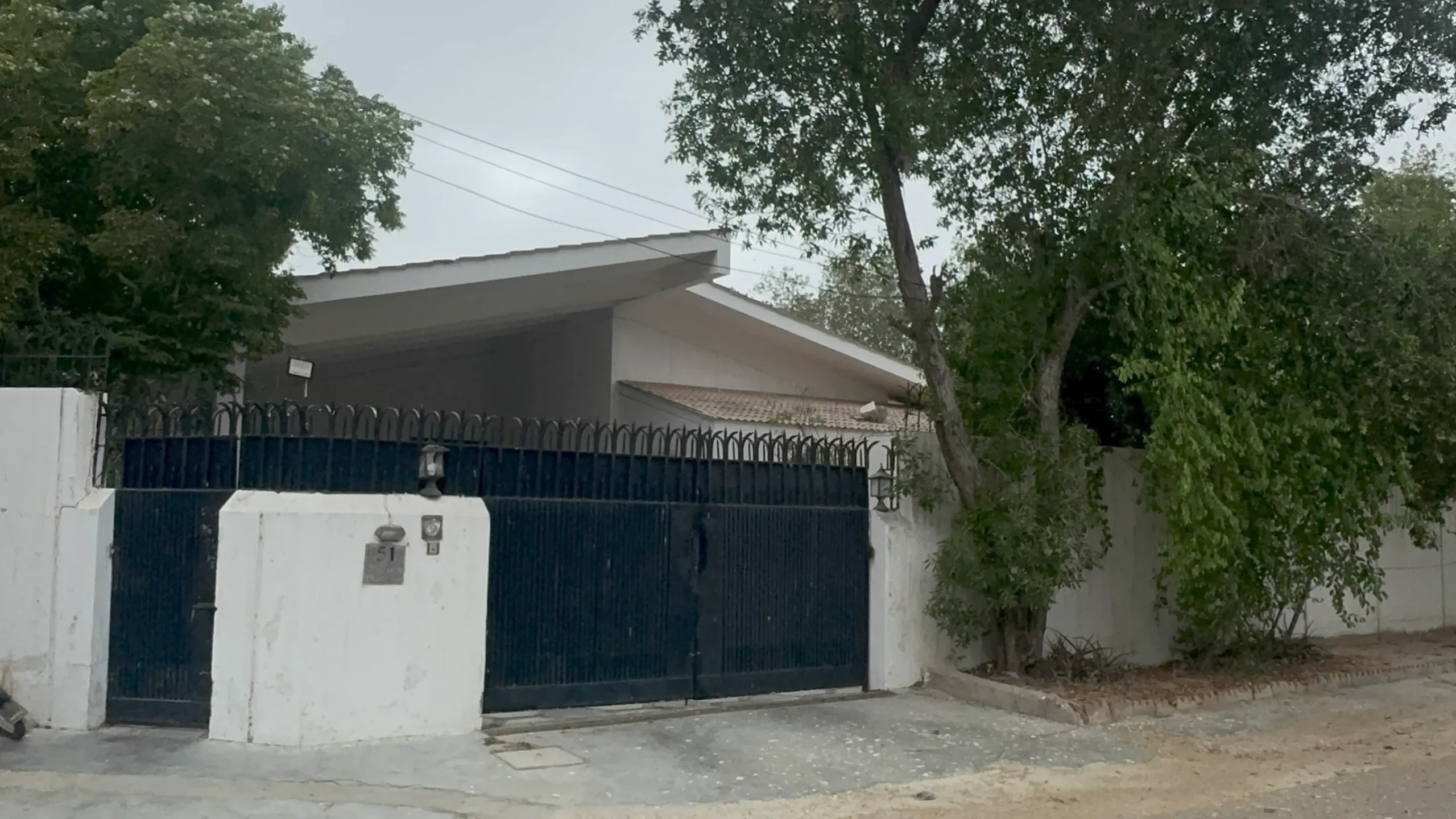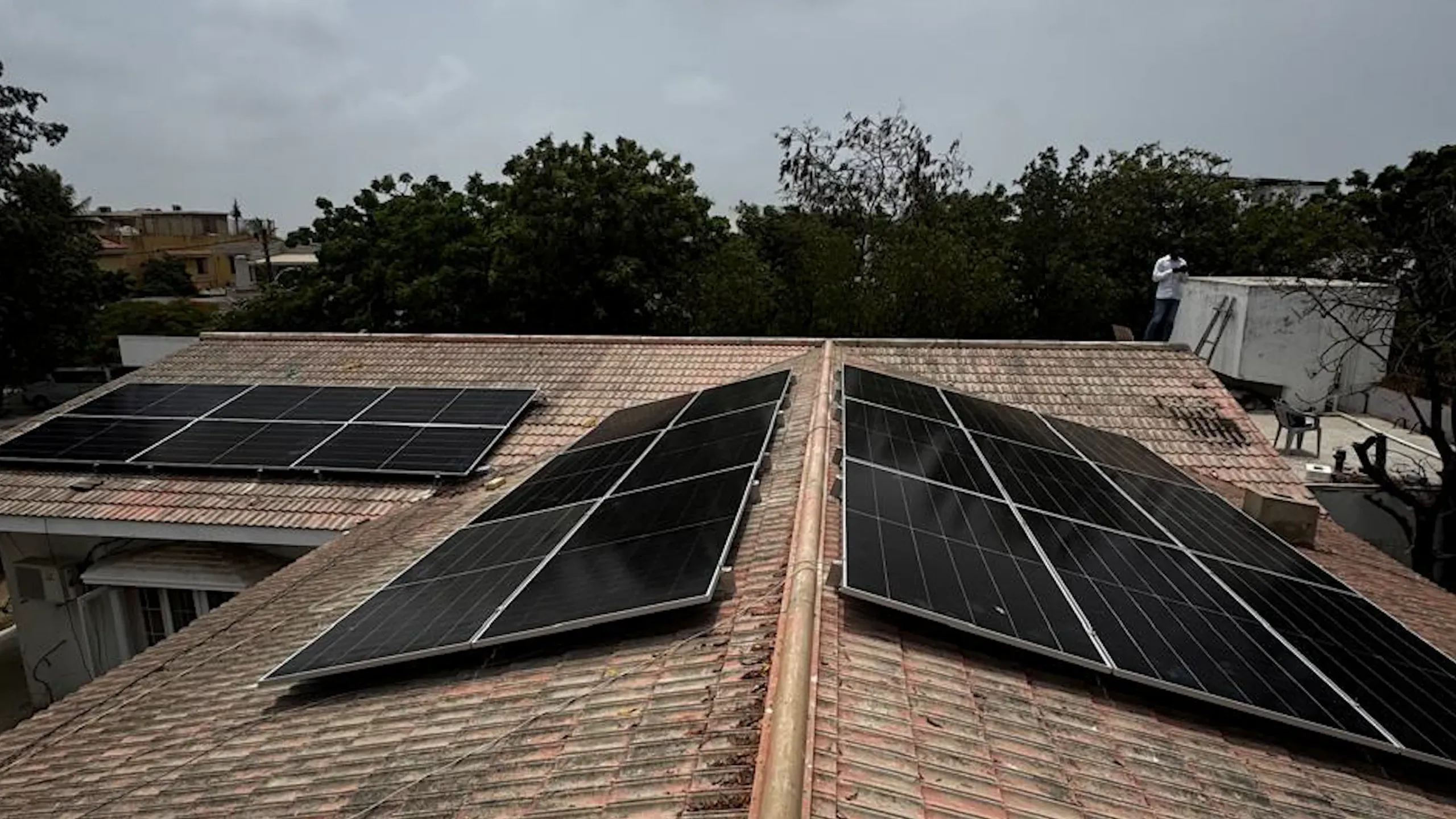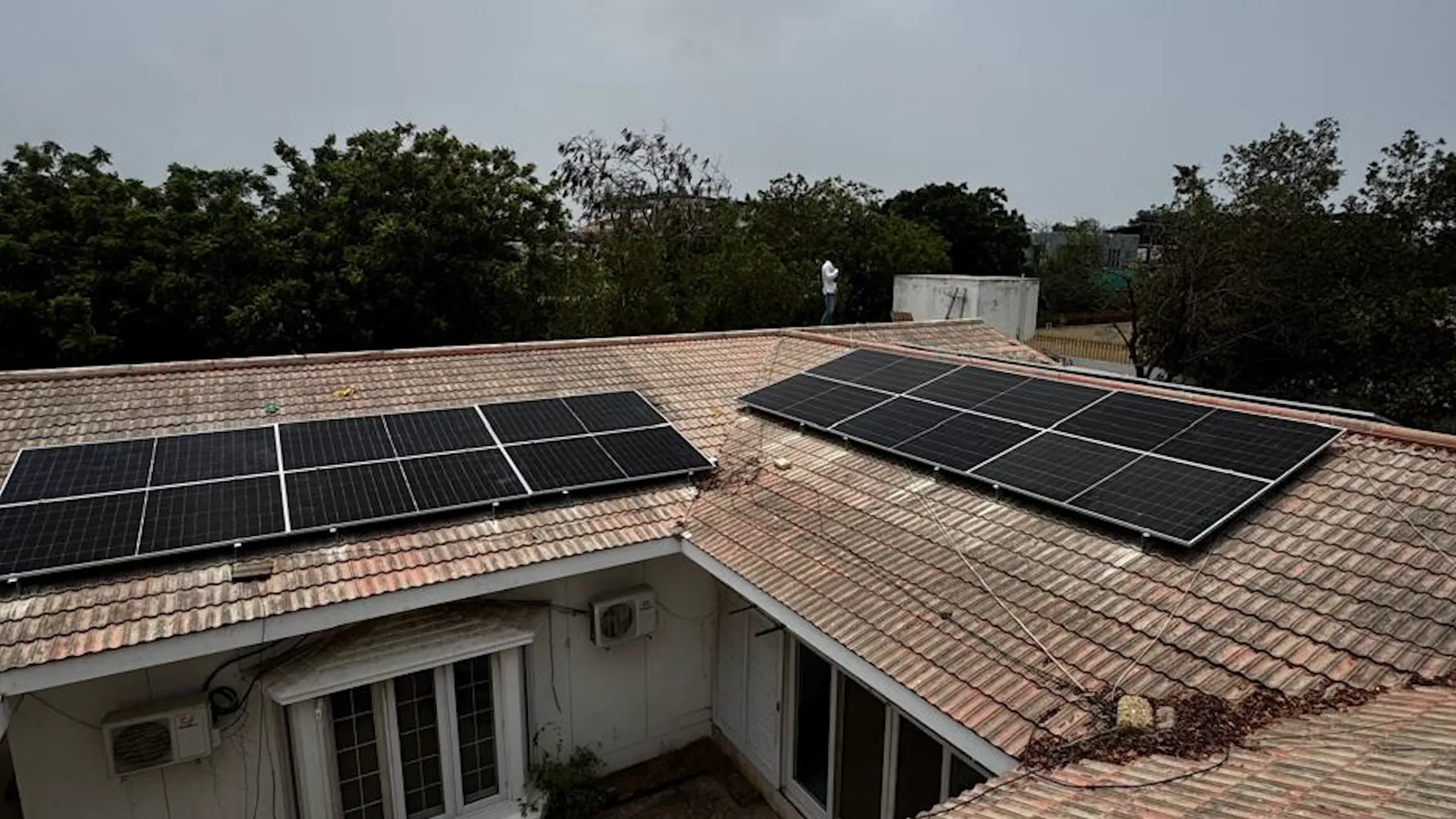
Dr Tahir’s brief was not about the bill. It was about the four inverter air conditioners in a Karachi house that needed to run through the afternoon without anybody thinking about it. That meant the array had to be sized against the cooling load at its peak, not against an average pulled off twelve months of billing.
The result is a 15 kW hybrid system with 16 kWh of lithium storage. Through daylight hours the house runs on solar with all four units operating. After dark the battery carries the essential circuits, so the evening does not depend on whether the grid is up. The system produces roughly 2,000 units a month, and the household’s relationship with load shedding has become largely theoretical.